RollProof guides

Real experience. Useful details.

Why we are building RollProof, what to look for in a protector, and an honest look at the towel question. Read the complete guides below.

From the founder

Why I started RollProof

By Darkhan Bylkylov, founder of RollProof
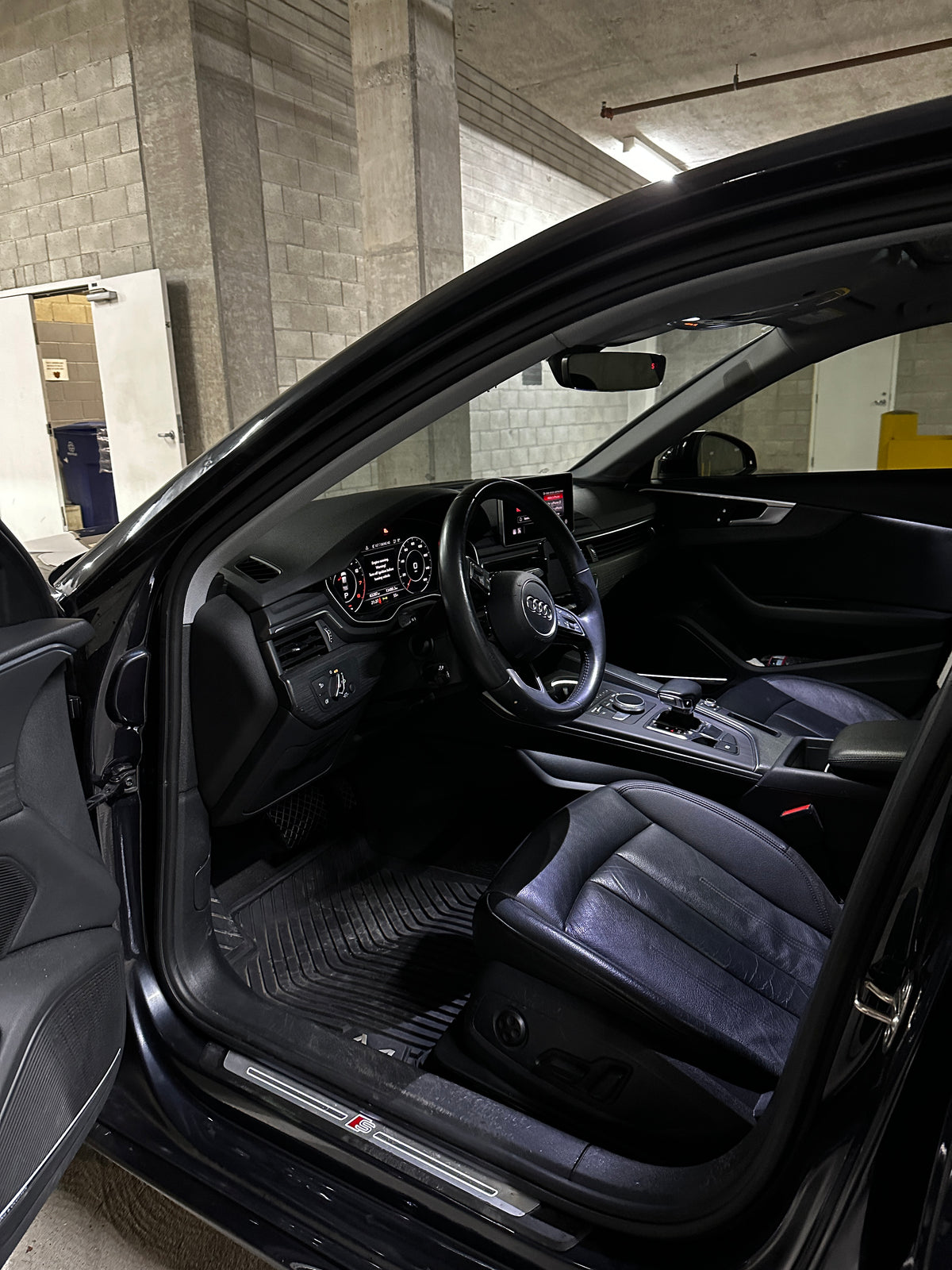
Open driver’s door of Darkhan’s Audi, showing the sill trim and seat after lighter paint repairs.
My Audi after lighter paint repairs for sale. The trim and seat still had marks. — Darkhan

I love my cars. The way they look, the way the interior feels, the feeling of getting into something I worked hard for. Being a wheelchair user does not make any of that matter less to me.

But the area around a car door takes a beating in my routine. Over time, I was looking at scratches, damaged trim and marks inside cars I wanted to keep looking good. I started building a car door protector because I wanted to stop accepting that as part of the deal.

The approximately $3,000 part of the story

I have spent around $3,000 on repairs across my cars. That is money I would rather have kept.

The Audi pictured here shows how those little contacts add up. I took this photo after lighter paint repairs to get the car into better condition for sale. Even then, marks remained on the trim and seat.

Preparing the car for sale made those details impossible to ignore. I wanted to spend my time enjoying my car, without another repair bill hanging over the same everyday routine.

I used a towel. I know the frustration.

It was already in the house, so it was the obvious thing to try. But living with it every day was another story.

Mine would fall out of position. It got dirty. I did not feel it was giving me the protection I wanted. Something that was supposed to make my routine easier became another thing to keep adjusting.

I wanted protection that stays with the car. For Door, the routine is simple: unfold it over the sill, transfer, roll it inside and close the door. It remains attached for the next trip.

The routine I wanted

Protection that belongs with a car you care about. A secure magnetic connection. Flexible construction. A compact roll inside between trips, ready when you open the door again.

For RollProof Door, we chose a Kevlar-fabric wear face with a neoprene rubber core. The magnetic attachment stays mounted. The flexible protector folds inside between trips and unfolds over the sill when it is needed.

A car you enjoy, with less fuss around it

I want to enjoy my car without constantly thinking about the next mark. Convenience and peace of mind matter to me alongside protecting the surface. I wanted to stop fetching, positioning and putting away a separate workaround every time.

If you have your own setup that works, I respect that. If you recognise the falling towel, the marked trim, or the feeling of paying to fix the same area again, you understand why I started.

For the practical questions, read our guide to choosing a car door protector for wheelchair transfers. And if the first question is whether a towel is enough, here is our honest towel comparison.

Explore the Door Protector

A practical buying guide

Choosing a car door protector

By RollProof

A car door protector for wheelchair transfers is intended to create a barrier between equipment and the part of the car it might contact. The details matter: a protector that misses your contact area, needs constant repositioning, or has unclear mounting instructions may not solve the problem you bought it for.

Start with your car and your everyday setup. The following questions help you compare a purpose-built protector, a towel or another option with a clear view of what matters in your routine.

1. Does it cover the part of the car you want to protect?

Look at the existing marks on your car and note the area you want a barrier to cover. The painted sill, plastic trim, inner door and edge of the seat are separate surfaces. A product described as a “door protector” may only cover one of them.

Ask for the usable coverage dimensions and a clear installed photo. Check how much material extends over an edge, where the mounting area sits, and whether the claimed dimensions include parts that do not provide coverage. A photograph on a different vehicle is a useful starting point, but it does not confirm a fit on yours.

2. Is the attachment explained for your actual car?

Find out what holds the protector in place and which surface it attaches to. Ask whether it stays attached during ordinary use and how the door closes. RollProof Door uses a magnetic connection and stays mounted between trips. It folds inside before you close the door.

Check the intended mounting surface and the clearance needed to close the door. Follow the installation instructions and keep the attachment area clean. If you need help checking your setup, send us your car model, year and a photo of the sill.

3. What is the protector made of?

Look beyond the outer fabric. A protector’s wear face, core and backing each have a job to do. The construction should combine a dedicated contact surface with enough flexibility for everyday handling.

Look at both the surface material and the structure underneath. A tough wear face and a flexible core have different jobs. For RollProof Door, the design combines Kevlar fabric with a neoprene rubber core to create a dedicated contact barrier.

Useful product information should help you judge coverage, attachment and everyday handling. If you are unsure how a protector will work with your car, send a sill photo and ask before ordering.

4. Can you keep the contact surfaces clean?

Keep both contact faces clean: remove grit, use suitable cleaners and allow the protector to dry. RollProof Door can be removed for cleaning whenever needed. Follow your vehicle’s surface-care instructions too.

For routine paint care, Mazda’s owner manual advises removing dirt before washing, using a soft cloth and cleaning gently to reduce scratches. Source: Mazda CX-5 Owner’s Manual, Appearance Care.

5. Is it convenient enough to use every time?

Compare the complete routine. Does the protector remain attached, or must you retrieve and reinstall it each time? RollProof Door stays mounted: open the door, unfold it, transfer in or out, then fold it inside and close the door.

Removal is optional for cleaning, sharing the car or moving Door to another compatible setup. Each car needs compatible mounting points. Look for a clear demonstration of ordinary use, including how the door closes.

6. What are you committing to at checkout?

Check the total price, what comes in the box, delivery status and return terms. For a preorder, check the estimated shipping window. For a trial, check when the clock starts, whether normal use is welcome and who pays return shipping.

The best choice for your situation is the one whose coverage, fit, care and everyday use are clear enough to assess. A lower price does not make an option useless; a higher price should come with a clearer reason to choose it.

Read towel vs car door protector for a practical comparison, or meet the founder behind RollProof.

Get help with fit

The everyday details

A towel or a dedicated protector?

By Darkhan Bylkylov, founder of RollProof

“Just use a towel” is an understandable reaction to a car door protector. A towel is familiar, easy to find, and probably already paid for. I used one myself.

So when I compare a towel vs a car door protector, I do not start by saying a cheap solution cannot work. I start with the routine. Does it cover the right area? Does it stay where you need it? Is it clean? Do you feel comfortable relying on it each time?

What made my towel frustrating

In my own setup, the towel would fall out of position. It got dirty, and I did not feel it protected the car properly. I was trying to keep my cars looking good while making an everyday task a little less annoying. Constantly thinking about the towel was not helping.

For me, the frustration was having to adjust it again and again. These are the everyday details I wanted to improve.

Compare the complete routine

What does it cost to try?
A towel: Little or nothing if you already own one.
RollProof: A dedicated protector with a 30-day trial from delivery and free return shipping.

Where does it provide coverage?
A towel: You choose the size and position it yourself.
RollProof Door: Coverage across the transfer area, with magnetic attachment to keep it mounted. Check your sill and closing clearance with our fit guide.

How is it kept in position?
A towel: Depends on the towel and your own setup.
RollProof Door: Magnetic attachment keeps it mounted. Unfold for your transfer, then roll it inside to close the door.

What is it made of?
A towel: Household fabric, chosen for drying and absorbing moisture.
RollProof Door: A Kevlar-fabric wear face, flexible neoprene rubber core and fabric backing.

How do you keep it clean?
A towel: Follow its care label and check both contact faces.
RollProof Door: Remove it for cleaning when needed, following its care instructions and your vehicle’s surface-care guidance.

Does it simplify your routine?
A towel: Consider how often you need to adjust, retrieve or replace it.
RollProof Door: Leave it attached. Unfold it over the sill when you need coverage, then roll it inside and close the door.

Convenience matters on every trip: a protector that stays with the car is one less thing to fetch, position and put away.

Keep the contact surfaces clean

Check both sides of your protector, remove grit and follow its care instructions. Consult your vehicle manual before using cleaning products on a finish.

Mazda’s owner manual recommends rinsing dirt off painted surfaces before washing and using a soft cloth with gentle pressure. Those simple care habits help you look after the finish around your everyday contact areas. Source: Mazda CX-5 Owner’s Manual, Appearance Care.

A better routine, built into the car

RollProof brings together the things I wanted in my own car: considered coverage, magnetic attachment, a clean-looking design and a compact protector that stays ready for the next trip.

RollProof Door combines a Kevlar-fabric wear face, neoprene rubber core and magnetic attachment. It stays attached between trips and folds inside so the door can close. The magnetic connection also makes it easy to remove when you want to clean it or share the car.

Is paying for a dedicated protector worth it?

For me, enjoying my car and spending less time fussing with a workaround are good reasons to want something better. The question is whether it earns its place in your routine. That is why RollProof comes with 30 days to try it after delivery, with normal use welcome and free return shipping.

If your towel keeps moving, leaves the wrong area exposed or becomes another thing to manage, that is the reason to look for a better routine. Try RollProof in your own car and decide how it fits into your day.

Use our six-point buyer’s guide to check coverage and fit. For the personal side, here is why I started RollProof.

Explore the Door Protector